How to plan a
temple-style wedding mandap.
A guide to the pillars, flowers, colors, and practical details that bring a temple-inspired ceremony together.
A temple-style mandap can make a wedding ceremony feel rich in tradition without every surface needing decoration. Its character comes from the relationship between the structure, the flowers, and the space around the couple. Start with those three elements, then choose the details that matter to your family.
If you are planning an Indian wedding in Houston, the venue matters as much as the inspiration photo. A design that works on a spacious outdoor lawn may need a different height, footprint, or backdrop in a ballroom. Use this guide to turn a favorite look into a clear conversation with your decorator.
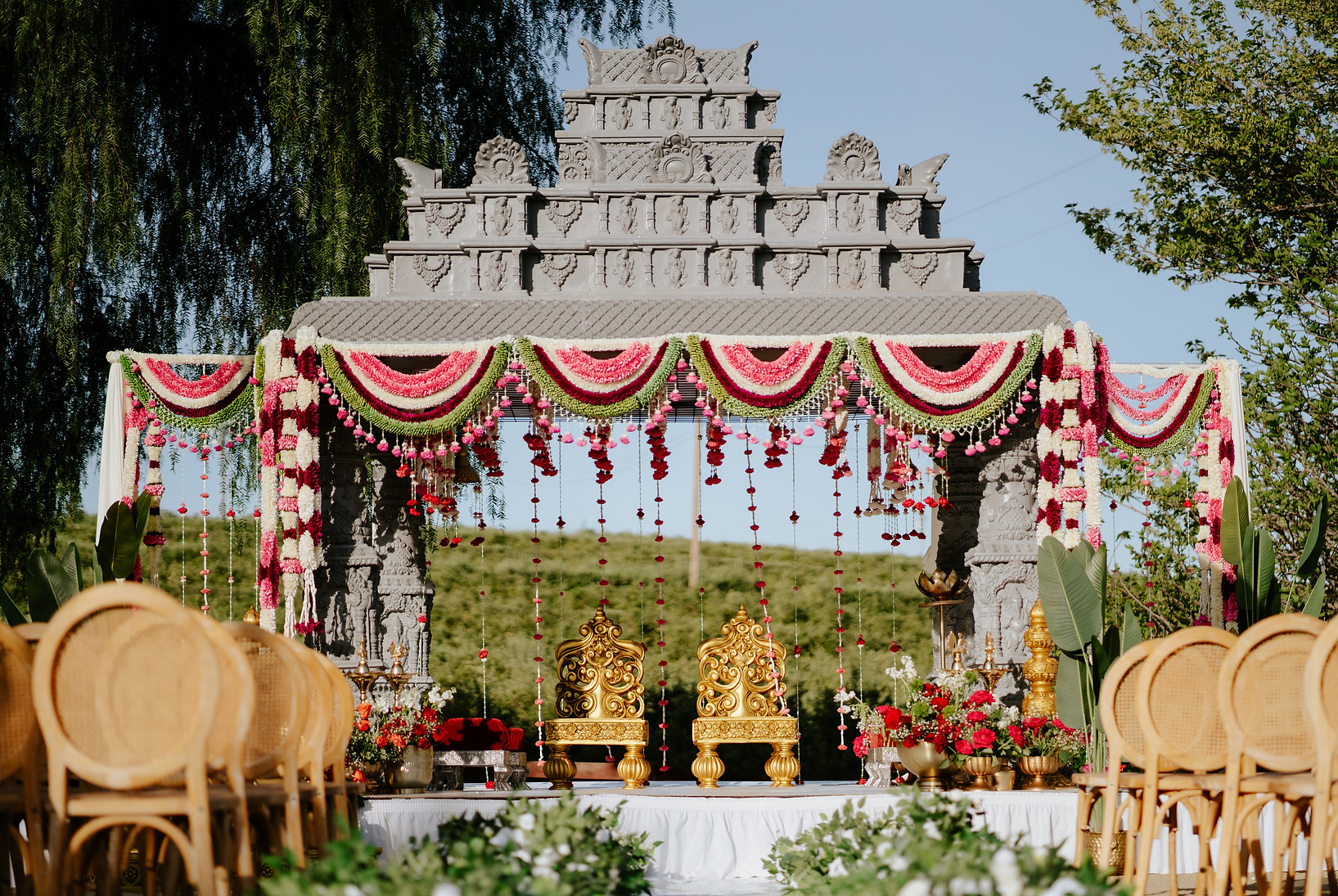
Choose the details you love.
Look beyond the overall impression of a reference image. Is it the carved pillars, the gold-tone finish, the temple-door backdrop, or the suspended bells that draw you in? Identifying two or three defining features helps your decorator create a coherent design around your priorities.
Ask how much of the structure will remain visible once flowers and draping are added. Ornate pillars often need some visual breathing room. The goal is to frame the ceremony clearly, with a backdrop that complements the couple and their attire.
Let one color lead.
A gold-tone structure can work with several floral directions. White and red create a strong traditional contrast; ivory and greenery feel softer; yellow and orange bring a brighter mood. Choose a lead color, a supporting color, and a neutral before adding smaller accents.
Review the palette alongside your wedding outfits and the venue’s carpet, walls, and lighting. A color that looks balanced in daylight can read differently under warm ballroom lights. Your reference images are a starting point for a palette that belongs in your space.
Put flowers where they matter.
Decide whether the main floral moment should sit across the canopy, follow the pillars, or continue along the aisle. Layering every area heavily can hide the architectural detail you chose in the first place.
Ask about fresh flowers, silk flowers, or a combination, and what will be available for your date. Discuss garland length, density, and placement together. Hanging flowers should add movement and texture while leaving faces, seating, and the ceremony easy to see.
Design around the people and rituals.
Before confirming the mandap footprint, ask your officiant who needs to sit or move within it. The couple, family members, ceremonial items, and the officiant all need a workable arrangement. For a Telugu or other South Indian wedding, use your family’s actual ceremony plan to guide the layout.
Discuss any sacred imagery, lamps, and ritual elements with your family. If your ceremony includes a sacred fire, coordinate the requirements with the officiant and venue before the decor is finalized. Leave clear access for participants and useful sightlines for guests and photographers.
Check the room before the reveal.
For Houston-area celebrations, confirm the ceiling height, stage dimensions, delivery route, and installation window early. A tall structure may fit the room but still require a practical way to bring each piece inside. Ask the venue about attachment restrictions and the time available for removal.
For an outdoor setting, discuss the surface, sun direction, wind exposure, and a weather backup. Choose an indoor alternative that can accommodate the ceremony if conditions change. Your decorator and venue should agree on what the space can support before the design is approved.
Choose your priorities before comparing quotes.
A temple mandap quote can include very different things from one proposal to the next. Compare the structure, backdrop, floral coverage, seating, stage, lighting, delivery, installation, and removal. Ask which elements are included and which are separate.
If you need to refine the budget, protect the features that first drew you to the style. A strong architectural focal point with a considered floral treatment may serve your vision better than adding more decor across the entire room. Request a clear scope for the design you actually want.
Bring a few clear details to the conversation.
You do not need a finished design before contacting a decorator. A short brief makes the first conversation much more useful:
- Event date, venue name, and ceremony type
- Indoor or outdoor setting and any venue dimensions you have
- Two or three reference photos, with the details you like identified
- Your outfit colors and preferred floral palette
- Family or officiant requirements that affect the layout
- Approximate decor budget and the venue’s installation schedule
Planning in Houston, Katy, Fulshear, or Sugar Land? Explore our temple mandap decor page and share your ideas with Decor by Srav. We’ll discuss a custom direction for your date, venue, and traditions.
A ceremony that feels like you.
Start with the details you love. Let the setting, flowers, and finishing touches grow from there.
Discuss your wedding decor